Americans waiting for the housing market to become more affordable may have to remain patient. Mortgage rates are now expected to stay elevated through much of 2027, while home prices could continue rising modestly, creating another difficult year for prospective buyers hoping that lower borrowing costs will make homeownership easier to achieve.
The mortgage industry is approaching one of its most significant appraisal changes in more than a decade as Fannie Mae and Freddie Mac move toward full implementation of the Uniform Appraisal Dataset 3.6 and redesigned Uniform Residential Appraisal Report. The transition will change far more than the appearance of appraisal reports. For lenders, underwriters, appraisal management companies, and technology providers, UAD 3.6 introduces a more structured, data-driven approach to ordering, reviewing, and submitting residential appraisals.
Buying a condominium may soon become more challenging for many homebuyers as new lending standards introduced by Fannie Mae and Freddie Mac increase the level of scrutiny applied to condominium projects. Mortgage professionals say the updated requirements are intended to strengthen the financial and structural integrity of condo communities, but they also warn the changes could lead to longer approval timelines, additional documentation requests, and more loan denials for buyers seeking conventional financing.
The U.S. housing market is showing additional signs of slowing as homebuilders scale back new single-family construction in response to elevated mortgage rates, higher construction costs, and softer buyer demand. Although the nation continues to face a long-term housing shortage, many builders are becoming increasingly cautious about launching new projects until affordability improves and consumer confidence strengthens.
After months of elevated borrowing costs, homebuyers received a bit of encouraging news as mortgage rates edged lower, providing a modest boost to affordability during the busy summer homebuying season. While the decline is relatively small, housing professionals say it could encourage more buyers who have been waiting on the sidelines to begin shopping for homes or move forward with pending purchase decisions.
Identity theft occurs when someone steals someone else’s identity and personal information. Identity theft is a very serious crime that has been on the rise over the last decade and is becoming more common. If someone steals your identity you may not realize it has happened but it can affect you for months or years to come.
Opinion-Editorial (Op-Ed) Disclaimer For NAMU® Library Articles: The views and opinions expressed in the NAMU® Library articles are those of the authors and do not necessarily reflect any official NAMU® policy or position. Examples of analysis performed within this article are only examples. They should not be utilized in real-world application as they are based only on very limited and dated open source information. Assumptions made within the analysis are not reflective of the position of NAMU®. Nothing contained in this articles should be considered legal advice.
The FHA with case numbers assigned on or after April 1, 2013 will be implementing revised underwriting guidelines and revised annual MIPS that will also last longer than the current MIP schedule.
Opinion-Editorial (Op-Ed) Disclaimer For NAMU® Library Articles: The views and opinions expressed in the NAMU® Library articles are those of the authors and do not necessarily reflect any official NAMU® policy or position. Examples of analysis performed within this article are only examples. They should not be utilized in real-world application as they are based only on very limited and dated open source information. Assumptions made within the analysis are not reflective of the position of NAMU®. Nothing contained in this articles should be considered legal advice.
Recently where I reside, Oceanside, NY, was impacted by Hurricane Sandy. Many homes and businesses were damaged by the winds and more by the surge brought on by the hurricane. The President of the United States toured the area and declared the area a “Presidentially Declared Federal Disaster Area” which now makes it easier to obtain mortgages, become homeowners or to re – establish themselves as homeowners under the FHA 203 (h) program.
Opinion-Editorial (Op-Ed) Disclaimer For NAMU® Library Articles: The views and opinions expressed in the NAMU® Library articles are those of the authors and do not necessarily reflect any official NAMU® policy or position. Examples of analysis performed within this article are only examples. They should not be utilized in real-world application as they are based only on very limited and dated open source information. Assumptions made within the analysis are not reflective of the position of NAMU®. Nothing contained in this articles should be considered legal advice.
Bankruptcy is one of the founding principles of the United States. Bankruptcy law is very straight forward; it is all about assisting consumers to discharge debt. The United States Bankruptcy Code enables individuals and businesses, who find themselves in desperate financial situations, to start over, “a second chance”.
Opinion-Editorial (Op-Ed) Disclaimer For NAMU® Library Articles: The views and opinions expressed in the NAMU® Library articles are those of the authors and do not necessarily reflect any official NAMU® policy or position. Examples of analysis performed within this article are only examples. They should not be utilized in real-world application as they are based only on very limited and dated open source information. Assumptions made within the analysis are not reflective of the position of NAMU®. Nothing contained in this articles should be considered legal advice.
What is a Credit Score? A credit score is a complex mathematical number generated that represents your estimated measure of credit risk. Typically, the higher the credit score, the less risk is associated with the debtor.
Opinion-Editorial (Op-Ed) Disclaimer For NAMU® Library Articles: The views and opinions expressed in the NAMU® Library articles are those of the authors and do not necessarily reflect any official NAMU® policy or position. Examples of analysis performed within this article are only examples. They should not be utilized in real-world application as they are based only on very limited and dated open source information. Assumptions made within the analysis are not reflective of the position of NAMU®. Nothing contained in this articles should be considered legal advice.
In order to simplify the disclosures for consumers and encourage more shopping, the CFPB or Consumer Financial Protection Bureau is in the process of changing the GFE. This change should be happening within the next few days, I imagine. So, I wanted to take another moment discuss this and hopefully shed some understanding and remind you of these changes soon to come.
Opinion-Editorial (Op-Ed) Disclaimer For NAMU® Library Articles: The views and opinions expressed in the NAMU® Library articles are those of the authors and do not necessarily reflect any official NAMU® policy or position. Examples of analysis performed within this article are only examples. They should not be utilized in real-world application as they are based only on very limited and dated open source information. Assumptions made within the analysis are not reflective of the position of NAMU®. Nothing contained in this articles should be considered legal advice.
As an FHA originator, processor or underwriter, it’s likely that in the ongoing foreclosure market you’ll run across a HUD REO loan at some point. The purpose of this multi-part article is to provide you with some useful information to help in your endeavors.
Opinion-Editorial (Op-Ed) Disclaimer For NAMU® Library Articles: The views and opinions expressed in the NAMU® Library articles are those of the authors and do not necessarily reflect any official NAMU® policy or position. Examples of analysis performed within this article are only examples. They should not be utilized in real-world application as they are based only on very limited and dated open source information. Assumptions made within the analysis are not reflective of the position of NAMU®. Nothing contained in this articles should be considered legal advice.
Happy New Year sounds very encouraging and brings new hopes to each individual in the world. Each individual wants to forget about the bad experience in the past and moves forward with a new hope for making coming year, more wonderful and productive.
Opinion-Editorial (Op-Ed) Disclaimer For NAMU® Library Articles: The views and opinions expressed in the NAMU® Library articles are those of the authors and do not necessarily reflect any official NAMU® policy or position. Examples of analysis performed within this article are only examples. They should not be utilized in real-world application as they are based only on very limited and dated open source information. Assumptions made within the analysis are not reflective of the position of NAMU®. Nothing contained in this articles should be considered legal advice.
The Mortgage industry standing today is due to nonconforming and BC (bad Credit) lending practiced in the past. There were 3 kinds of lending in practice at that time. One was Conforming loans, FHA loans and Nonconforming.
Opinion-Editorial (Op-Ed) Disclaimer For NAMU® Library Articles: The views and opinions expressed in the NAMU® Library articles are those of the authors and do not necessarily reflect any official NAMU® policy or position. Examples of analysis performed within this article are only examples. They should not be utilized in real-world application as they are based only on very limited and dated open source information. Assumptions made within the analysis are not reflective of the position of NAMU®. Nothing contained in this articles should be considered legal advice.
A few weeks ago we discussed some of the changes coming our way to how we do things in our industry. Here are a few more clarifications of things coming our way. The Dodd-Frank Act states that a creditor may not make a mortgage loan without first determining that the borrower has a reasonable ability-to-repay the loan.
Opinion-Editorial (Op-Ed) Disclaimer For NAMU® Library Articles: The views and opinions expressed in the NAMU® Library articles are those of the authors and do not necessarily reflect any official NAMU® policy or position. Examples of analysis performed within this article are only examples. They should not be utilized in real-world application as they are based only on very limited and dated open source information. Assumptions made within the analysis are not reflective of the position of NAMU®. Nothing contained in this articles should be considered legal advice.









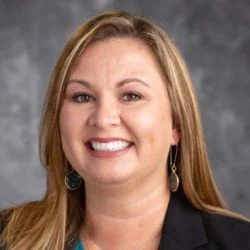





































Written By: Stacey Sprain
As an FHA originator, processor or underwriter, it’s likely that in the ongoing foreclosure market you’ll run across a HUD REO loan at some point. The purpose of this multi-part article is to provide you with some useful information to help in your endeavors.