Manufactured housing could be headed for significant growth as recent changes to federal housing regulations open new opportunities for factory-built homes. Federal housing officials believe the reforms could help lower construction costs, expand housing supply, and make homeownership more accessible to Americans struggling with elevated home prices and mortgage rates.
Shares of Fannie Mae and Freddie Mac are heading toward a difficult end to September as investors become increasingly skeptical that the two mortgage finance giants will soon emerge from government conservatorship. Fresh analyst price-target cuts have added to the uncertainty, putting additional pressure on stocks that have already experienced steep declines this year.
Americans could soon face another increase in borrowing costs as the Federal Reserve prepares for a highly anticipated interest rate decision. Financial markets widely expect policymakers to raise the federal funds rate by a quarter percentage point, a move intended to combat renewed inflation pressures but one that could also make credit cards, auto loans, and certain home loans more expensive.
Americans waiting for the housing market to become more affordable may have to remain patient. Mortgage rates are now expected to stay elevated through much of 2027, while home prices could continue rising modestly, creating another difficult year for prospective buyers hoping that lower borrowing costs will make homeownership easier to achieve.
The mortgage industry is approaching one of its most significant appraisal changes in more than a decade as Fannie Mae and Freddie Mac move toward full implementation of the Uniform Appraisal Dataset 3.6 and redesigned Uniform Residential Appraisal Report. The transition will change far more than the appearance of appraisal reports. For lenders, underwriters, appraisal management companies, and technology providers, UAD 3.6 introduces a more structured, data-driven approach to ordering, reviewing, and submitting residential appraisals.
Mortgage education has become a vital tool for residential and commercial lending professionals in the current environment. Right now, there is a heightened emphasis on compliance with lending regulations and underwriting guidelines.
Opinion-Editorial (Op-Ed) Disclaimer For NAMU® Library Articles: The views and opinions expressed in the NAMU® Library articles are those of the authors and do not necessarily reflect any official NAMU® policy or position. Examples of analysis performed within this article are only examples. They should not be utilized in real-world application as they are based only on very limited and dated open source information. Assumptions made within the analysis are not reflective of the position of NAMU®. Nothing contained in this articles should be considered legal advice.
Very often while teaching underwriting courses I am often asked by students if the course will lead them to obtaining a CHUMS number or “DE” designation. I always say “no”. My classes always state that an employer must nominate an employee to be a FHA DE underwriter.
Opinion-Editorial (Op-Ed) Disclaimer For NAMU® Library Articles: The views and opinions expressed in the NAMU® Library articles are those of the authors and do not necessarily reflect any official NAMU® policy or position. Examples of analysis performed within this article are only examples. They should not be utilized in real-world application as they are based only on very limited and dated open source information. Assumptions made within the analysis are not reflective of the position of NAMU®. Nothing contained in this articles should be considered legal advice.
Are you ever tempted to place a loan back into the underwriting queue before all conditions are in? Do you believe that submitting a “deal breaker” condition for underwriting review without all the other conditions will speed up the approval process? If so, this article is for you!
Opinion-Editorial (Op-Ed) Disclaimer For NAMU® Library Articles: The views and opinions expressed in the NAMU® Library articles are those of the authors and do not necessarily reflect any official NAMU® policy or position. Examples of analysis performed within this article are only examples. They should not be utilized in real-world application as they are based only on very limited and dated open source information. Assumptions made within the analysis are not reflective of the position of NAMU®. Nothing contained in this articles should be considered legal advice.
In most of the country property values are increasing after a period of property values being stable or declining. The only area not increasing dramatically at the moment is in the Northeast. Who knows how long that will last?
Opinion-Editorial (Op-Ed) Disclaimer For NAMU® Library Articles: The views and opinions expressed in the NAMU® Library articles are those of the authors and do not necessarily reflect any official NAMU® policy or position. Examples of analysis performed within this article are only examples. They should not be utilized in real-world application as they are based only on very limited and dated open source information. Assumptions made within the analysis are not reflective of the position of NAMU®. Nothing contained in this articles should be considered legal advice.
Letters of Explanation (sometimes abbreviated to LOX or LOE) are a common condition on loan files. Underwriters request them to explain large deposits, residence histories, derogatory credit, credit inquiries, and much more. However, it is important to understand that in most cases, the LOX is just the beginning.
Opinion-Editorial (Op-Ed) Disclaimer For NAMU® Library Articles: The views and opinions expressed in the NAMU® Library articles are those of the authors and do not necessarily reflect any official NAMU® policy or position. Examples of analysis performed within this article are only examples. They should not be utilized in real-world application as they are based only on very limited and dated open source information. Assumptions made within the analysis are not reflective of the position of NAMU®. Nothing contained in this articles should be considered legal advice.
For many years credit scoring was not present and the analysis of an applicant’s credit report was very subjective. The review was often loaded with cultural biases and had no rhyme or reason.
Opinion-Editorial (Op-Ed) Disclaimer For NAMU® Library Articles: The views and opinions expressed in the NAMU® Library articles are those of the authors and do not necessarily reflect any official NAMU® policy or position. Examples of analysis performed within this article are only examples. They should not be utilized in real-world application as they are based only on very limited and dated open source information. Assumptions made within the analysis are not reflective of the position of NAMU®. Nothing contained in this articles should be considered legal advice.
As a seasoned mortgage professional I am often asked where a person can obtain real estate for less money and where they can obtain financing easily. I often answer, go to www.homepath.com where Fannie Mae lists properties that they have foreclosed and have taken back (REO).
Opinion-Editorial (Op-Ed) Disclaimer For NAMU® Library Articles: The views and opinions expressed in the NAMU® Library articles are those of the authors and do not necessarily reflect any official NAMU® policy or position. Examples of analysis performed within this article are only examples. They should not be utilized in real-world application as they are based only on very limited and dated open source information. Assumptions made within the analysis are not reflective of the position of NAMU®. Nothing contained in this articles should be considered legal advice.
Have you begun to memorize and master the 20-30 ID and passwords needed to access all of the mortgage technology or did you decide to use one password for all accounts? Believe me, I know it is overwhelming when you have to remember so many different pieces of information to access different portals and websites to perform your job.
Opinion-Editorial (Op-Ed) Disclaimer For NAMU® Library Articles: The views and opinions expressed in the NAMU® Library articles are those of the authors and do not necessarily reflect any official NAMU® policy or position. Examples of analysis performed within this article are only examples. They should not be utilized in real-world application as they are based only on very limited and dated open source information. Assumptions made within the analysis are not reflective of the position of NAMU®. Nothing contained in this articles should be considered legal advice.
On February 7, 2013 Senators Menendez and Boxer introduced a bill called “The Responsible Homeowners Act of 2013.” At the present moment this bill is in committee. If the bill comes out of committee and if it passes the full Senate and the House of Representatives in its present form, HARP refinances will be extended for at least another year.
Opinion-Editorial (Op-Ed) Disclaimer For NAMU® Library Articles: The views and opinions expressed in the NAMU® Library articles are those of the authors and do not necessarily reflect any official NAMU® policy or position. Examples of analysis performed within this article are only examples. They should not be utilized in real-world application as they are based only on very limited and dated open source information. Assumptions made within the analysis are not reflective of the position of NAMU®. Nothing contained in this articles should be considered legal advice.
For many years all FHA mortgage loans were manually underwritten and then with artificial intelligence and automation, FHA shifted to automated underwriting. The FHA developed “TOTAL” to be used in conjunction with Fannie Mae’s Desk Top Underwriter (DU) or Freddie Mac’s Loan Prospector (LP) to underwrite FHA mortgage loan s except for FHA Streamline refinances and for borrowers with no credit history.
Opinion-Editorial (Op-Ed) Disclaimer For NAMU® Library Articles: The views and opinions expressed in the NAMU® Library articles are those of the authors and do not necessarily reflect any official NAMU® policy or position. Examples of analysis performed within this article are only examples. They should not be utilized in real-world application as they are based only on very limited and dated open source information. Assumptions made within the analysis are not reflective of the position of NAMU®. Nothing contained in this articles should be considered legal advice.











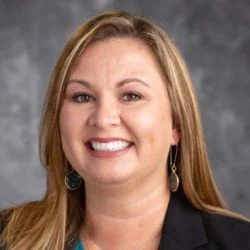




































Written By: Stacey Sprain
As an FHA originator, processor or underwriter, it’s likely that in the ongoing foreclosure market you’ll run across a HUD REO loan at some point. The purpose of this multi-part article is to provide you with some useful information to help in your endeavors.